
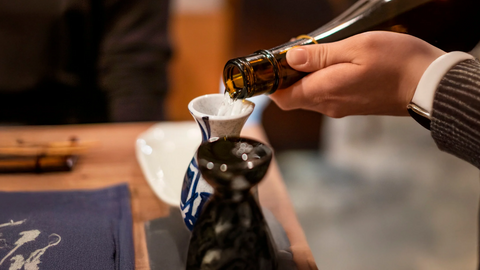
You've had sake once, maybe twice. A warm carafe at a work dinner, a tiny cup handed across the table, no idea what was in it. Now you're looking at a page of bottles with names you can't pronounce, and every one of them costs real money.
So you close the tab and buy the Pinot you always buy.
Here's the thing: the Pinot is the answer. The wine you already like is the fastest map into sake there is, once you know how to read one number on the label.
The short answer
Pick sake the way you pick wine: by style, not by price or prestige. Crisp, fragrant, rich, funky, sweet: sake does all of them, and each one lines up with a wine you already drink.
Plenty of confident wine drinkers feel like beginners again the moment they land on a sake page. You don't need to. You already have the most useful skill: knowing what you like.
What sake actually is
Sake is brewed, not distilled. Four ingredients: rice, water, yeast and koji, a mould grown on steamed rice that turns starch into sugar. The clever part is that the koji makes sugar and the yeast turns it into alcohol at the same time, in the same tank. Brewers call it multiple parallel fermentation, and it's why sake sits closer to wine in strength than to spirits. Most bottles land between 14 and 16 per cent.
Sake isn't a spirit, and it isn't really a wine either. It's brewed like beer and drinks like wine. That's why your wine instincts work on it so well.
The big style lever is polishing. Every grain of rice is milled before brewing, and the more of the outer layer that comes off, the lighter and more fragrant the sake gets. Think of it like trimming a steak: take off the outside and you lose some of the savoury richness, but what's left is cleaner and more delicate.
The labels, decoded
Japan's National Tax Agency sets the rules for the premium grades in its Labeling Standards for the Manufacturing Process and Quality of Sake (Notice No. 8, 22 November 1989). These are the words you'll see most:
| On the label | Rice left after polishing | Brewer's alcohol added? | What you're in for |
|---|---|---|---|
| Junmai | No minimum set | No | Rich, savoury, built for food |
| Honjozo | 70% or less | A small amount | Light, dry, easy |
| Junmai Ginjo | 60% or less | No | Fragrant, fruity, fresher |
| Ginjo | 60% or less | A small amount | Aromatic and lifted |
| Junmai Daiginjo | 50% or less | No | Silky, perfumed, the top tier |
| Daiginjo | 50% or less | A small amount | Elegant, very fragrant |
Now look at the second column again, because this is where everyone trips. The percentage is what's left, not what's taken away. A sake marked 50% has had half of every grain milled off. Smaller number, more polishing.
And the "brewer's alcohol" column isn't a cheat. A small dose of neutral spirit lifts the aroma and lightens the body. "Junmai" on the label simply means it's pure rice, nothing added. Neither is better. They're different styles.
Drink this if you love...
This is the bit you actually came for. Find your wine, find your sake.
- Crisp Sauvignon Blanc or Riesling: a Junmai Ginjo. Bright, fruity and clean, best straight from the fridge. Try the Kizakura Hana Junmai Ginjo.
- Chardonnay with a bit of weight: a Junmai. Rounder, savoury, and the only style on this list that's happy warm. Try the Konishi Kokuagari Junmai.
- Champagne or anything fine and fragrant: a Junmai Daiginjo. Floral, silky and very easy to like. The Hakutsuru Junmai Daiginjo is a gentle way in. For a gift-level step up, the Fukuju Daiginjo.
- Natural wine and anything a bit funky: a Kimoto. It's made with an old, slow starter method that lets natural lactic bacteria do their thing, so it comes out tangier and more savoury. Try the Kiku-Masamune Junmai Kimoto.
- Oaky reds, or you're really a whisky person: a Taru sake, rested in Japanese cedar casks. Woody, spicy, nothing like the clean style you expect. Try the Kiku-Masamune Junmai Taru.
- Moscato, or anything with a bit of sweetness: a Nigori. Cloudy, creamy and softly sweet, because it's only coarsely filtered. Try the Igarashi Tenransan Momoiro Nigori.
- Not ready to commit to a full bottle: start small. The Hizen Kuragokoro Junmai Ginjo 55 comes in a 300 mL bottle, which is two or three glasses and zero pressure.
Hot or cold?
Both are right. It depends on the style, not the season.
Chill the fragrant ones. Ginjo and Daiginjo get served like a good white wine. Warm them and you cook off the aromas you paid for.
Warm the rich ones. A sturdy Junmai or a Kimoto opens up at around 40 to 45°C. Sit the bottle, or a small jug, in a bowl of hot water for a few minutes. Don't microwave it, and don't boil it.
If you're unsure, serve it cool and let it warm up in the glass. You'll taste it change as you go.
Does more polishing mean better sake?
No, and this one's worth saying out loud because the price tags imply otherwise.
Polishing changes the style, not the quality. A Daiginjo costs more because milling away half of every grain takes time and throws away a lot of rice. That's real effort, and it buys you elegance. But a well-made Junmai with a plate of karaage beats a Daiginjo in that moment, every time. The richness is the point.
It's the same as Champagne against a great Chablis. One isn't a better version of the other. They're for different nights.
What to eat with it
Sake's natural savouriness, the umami, makes it one of the easiest drinks to put next to food. Sashimi and sushi are obvious. Less obvious and just as good: oysters, fried chicken, hard cheeses, roast pork and anything off the barbecue.
Pairing rule of thumb: delicate sake for delicate food, rich sake for rich food. Same logic you'd use with wine.
The plot twist: sake used to taste like a barrel
The clean, glassy style most people picture is the modern version.
For most of its history, sake didn't travel in bottles. It went in cedar casks. In the Edo period, sake from the brewing towns around Nada was shipped by sea to Edo, the city we now call Tokyo, sitting in those casks for the whole journey. By the time it arrived it had picked up the wood's spicy, resinous character, and that was simply what sake tasted like to a lot of drinkers.
Glass bottles took over, and the cedar went with them. Taru sake keeps the old flavour going on purpose.
So next time someone tells you good sake should taste "clean", you can tell them that for a few hundred years, it tasted like a timber yard. And people loved it.
The bottom line
You don't need to learn Japanese or memorise grades to buy good sake. Start with the wine you love, find its match, and read the polishing number the right way round. Smaller number, more polished, lighter and more fragrant. Bigger number, more savoury and food-friendly.
If you want to feel the difference rather than read about it, order a Junmai Daiginjo and a Junmai and open them the same night. Chill the Daiginjo, gently warm the Junmai, and pour a glass of each. Two sips and you'll know which end of the table you sit at.
Browse our full sake and rice wine range, with fast delivery Australia wide and free shipping across NSW on orders over $150. Still not sure? Email us at order@whiskywinesake.com.au, tell us the wine you always reorder, and we'll suggest the sake to match. And if you've ever wondered how sake differs from Chinese rice wine or mirin, we've explained that here.
FAQs
What's the best sake for beginners?
A Junmai Ginjo or Junmai Daiginjo, served chilled. Both are fragrant, fruity and easy to like, and they're the styles most wine drinkers enjoy straight away.
What does Junmai mean on a sake label?
Junmai means pure rice: the sake is made from rice, water, yeast and koji only, with no brewer's alcohol added.
What does the percentage on a sake label mean?
It's the polishing ratio, the share of each rice grain left after milling. A lower number means more of the grain was polished away, which usually gives a lighter, more fragrant sake.
Should sake be served warm or cold?
It depends on the style. Chill Ginjo and Daiginjo sake. Rich Junmai and Kimoto styles can be gently warmed to around 40 to 45°C.
How strong is sake?
Most sake sits between 14 and 16 per cent alcohol, closer to wine than to spirits.
How long does sake last once it's open?
Kept in the fridge, an opened bottle drinks well for one to two weeks. Unopened sake is best stored cool and dark, and enjoyed young.
Is sake the same as rice wine?
Not quite. Sake is a specific Japanese brewed drink, while "rice wine" covers a wider family that includes Chinese shaoxing and Korean makgeolli.
Comments (0)
There are no comments for this article. Be the first one to leave a message!