
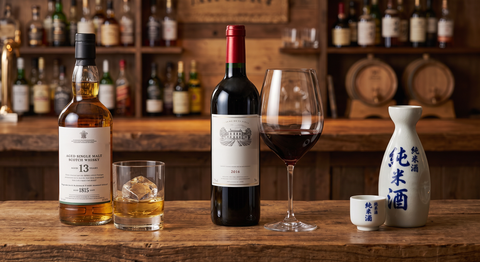
It's mid-November. You have a name on the list, a number in your head and three tabs open. Whisky for your dad, something for the boss, and a gift for the friend who has everything and recently mentioned sake.
You don't want to spend $100 on a bottle that disappears into the back of a pantry. You also don't want to hand over $30 of "I grabbed this on the way out the door".
Both problems have the same fix. Pick the person first and the price second.
The short answer
Choose the person first, then the price. Below are bottles from our range at about $30, $50 and $100, and every one is in stock now.
That's the whole guide. A bottle that suits the person beats a pricier one that doesn't, so read the picks, then skip to the section on who each one suits.
The gift guide at a glance
|
Budget |
Our picks |
|
Around $30 |
Henschke Five Shillings 2024 (33);KizakuraHanaJunmaiGinjo(33) |
|
Around $50 |
Curtis Small Batch McLaren Vale Shiraz (49.99);IgarashiShuzoTenransanMomoiroNigori(49.99) |
|
Around $100 |
Starward Panettone Whisky (89.95);PenfoldsBin389CabernetShiraz(93); Fukuju Daiginjo ($99.99) |
Pick your person, find the budget, and the label stops being the hard part.
Around $30
-
Henschke Five Shillings 2024, $33. A respected South Australian producer at a price that won't raise eyebrows. Easy beats ambitious here.
-
Kizakura Hana Junmai Ginjo, $33. Ginjo is the lighter, more fragrant style of sake, and it's best lightly chilled. It's an easy way to hand someone something they've probably never owned.
Around $50
-
Curtis Small Batch McLaren Vale Shiraz, $49.99. A small batch bottle over a big brand. This is the one that makes them ask where you found it.
-
Igarashi Shuzo Tenransan Momoiro Nigori, $49.99. Nigori is coarsely filtered, which leaves it cloudy, creamy and gently sweet. It looks and tastes unlike anything most people have poured before.
Around $100
-
Starward Panettone Whisky, $89.95. A Melbourne whisky inspired by Sicilian panettone, which makes it a very Christmas bottle and a story to tell when they open it.
-
Penfolds Bin 389 Cabernet Shiraz, $93. A bottle with a track record, for a dinner that matters.
-
Fukuju Daiginjo, $99.99. Daiginjo is the top polishing grade, with a silky, perfumed style that's best lightly chilled. Serve it in a wine glass and it's the gift that gets "I didn't know sake could taste like this".
Which one should you actually buy?
-
Teacher, neighbour, host, Secret Santa: stay around $30.
-
Colleague, parent, friend you see often: around $50, and pick the one that looks chosen rather than grabbed.
-
Partner, boss, milestone birthday: around $100. If it looks like a gift before you wrap it, you've chosen well.
-
Someone who loves a good dinner but doesn't drink much: the sake. It's lower in alcohol than whisky and it works with food.
-
You genuinely don't know what they drink: the Penfolds. It's the most widely enjoyed style on this page and needs no ceremony to open.
Two things worth knowing before you buy
Whisky won't improve in the box. It matures in the cask, and that stops once it's bottled. So there's no reason to tell someone to hold onto it. A bottle given this Christmas is as good as it will ever be.
Sake is the opposite. It's a drink to enjoy fresh, and many brewers suggest drinking sake within about a year of bottling, and sooner for unpasteurised styles (called nama), which are best kept in the fridge. So give it to someone who'll open it, not someone who'll save it for the right occasion. You can add "best opened soon" to the card and they'll know you know your stuff.
The plot twist: Christmas isn't the only gift season
Here's a fact for the table at Christmas lunch. Japan has its own year-end gift season, called oseibo, where people give presents to thank those who helped them through the year.
The custom is generally traced back to offerings made to ancestors at the end of the year. By some accounts, sake was among those offerings. Over centuries it grew from a family ritual into a way of saying thank you to teachers, bosses, clients and friends.
So if anyone tells you giving drinks at year's end is just a Western habit, you can tell them Japan has been doing it for a very long time. It's also a good reason a bottle of sake works so well as a thank you.
The bottom line
A good gift bottle isn't the most expensive one. It's the one that fits the person and feels chosen, whatever the price tag says.
If you want to be sure before you wrap, order two bottles from opposite ends of the budget, say a $30 pick and a $100 pick, and taste them side by side. You'll know exactly what the extra money buys, and you'll choose with confidence.
Browse our best sellers and gifts, or jump straight to whisky, wine or sake. We offer fast delivery Australia wide and free shipping across NSW on orders over $150. Stuck on who gets what? Email us at order@whiskywinesake.com.au with the person, the budget and what they like, and we'll point you to the right bottle.
FAQs
How much should I spend on a bottle as a gift?
It depends on the relationship. $30 suits hosts, neighbours and Secret Santa. $50 suits colleagues, friends and family. $100 suits partners, bosses and milestones.
Is $30 too cheap for a gift?
No. A well-chosen $30 bottle beats a poorly chosen $100 one. The mistake isn't the price. It's picking something the person won't enjoy.
What's the safest gift if I don't know what they drink?
Wine at around $50. It's the most widely enjoyed of the three, and it needs no special glassware or knowledge to open.
Is sake a good Christmas gift?
Yes, particularly for someone who has everything. It's unexpected, it works with food and most people have never owned a good bottle. Just give it to someone who'll open it soon.
How long does sake last?
Sake is best enjoyed fresh, and many brewers suggest drinking sake within about a year of bottling. Unpasteurised (nama) sake is best sooner and should be kept cold. Once opened, keep it in the fridge and finish it within a week or so.
Does whisky get better if I keep it?
Not once it's bottled. Whisky ages in the cask, so an unopened bottle won't improve over time. Open it when the moment suits.
What is oseibo?
Oseibo is Japan's year-end gift custom, where people give presents to thank those who've helped them during the year. It's generally traced back to year-end offerings to ancestors.

Comments (0)
There are no comments for this article. Be the first one to leave a message!