
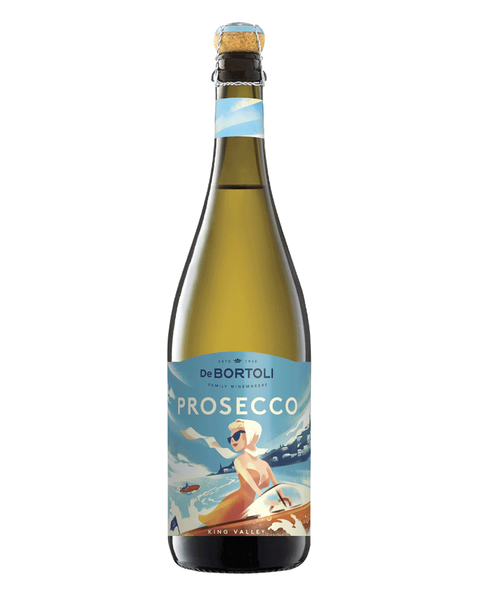
Someone turns up to a barbecue with prosecco and apologises for it. You've seen this happen. Possibly you've done it.
Stop. The prosecco is fine. The prosecco is, for most of what you're about to eat and most of the afternoon ahead of you, the better bottle.
Prosecco gets treated like Champagne that didn't make the cut. Same idea, less money, slightly embarrassing. That's not what it is. It's a different grape, grown in a different place, made by a completely different method, built for a completely different job.
Here's what's actually going on in the bottle.
The short answer
Champagne gets its bubbles in the bottle. Prosecco gets its bubbles in a tank.
That's the whole thing. Every difference you taste comes out of that one decision.
Why the tank changes everything
Champagne does its second fermentation inside the bottle you buy, then sits on the spent yeast for years in a cold cellar. That contact is where the bread, the brioche, the toasted nutty thing comes from. It's slow, it's expensive, and it's most of what you're paying for.
Prosecco does its second fermentation in a big sealed steel tank, under pressure, and then gets bottled. The Italians call it the Martinotti method. Most of the world calls it Charmat. Either way it's weeks, not years.
Nobody chose the tank because it was cheap. They chose it because of the grape.
Prosecco is made from Glera, and Glera's whole personality is primary fruit. Green apple, pear, white flowers, a bit of citrus. Park that on spent yeast for three years and you'd bury the only thing it's good at. The tank protects it. You get the fruit, fresh, exactly as the grape grew it.
So Champagne tastes like bread because of the method. Prosecco tastes like pears because of the method. Neither is a compromise. They're two different answers to two different questions.
The bit most people have backwards
Here's where the money goes wrong.
With Champagne, spending more usually buys you time. More years on lees, better fruit, more complexity. The logic holds most of the way up.
With prosecco it mostly doesn't. Prosecco is built to be drunk young and fresh, and past about two years it stops being lively and starts being tired. A dusty bottle at the back of the cupboard isn't maturing. It's fading.
Which means the expensive prosecco is often the worse buy. Not always, and we'll get to the exception. But if you're choosing between a twenty dollar bottle that shipped this year and a thirty five dollar bottle that's been sitting since 2023, take the twenty.
Buy prosecco like you buy bread, not like you buy whisky.
Reading the label
Three words actually matter.
| On the label | What it means | What to expect |
|---|---|---|
| Prosecco DOC | The broad zone. Flat country across Veneto and Friuli, nine provinces, over 80% of all prosecco made | Everyday. Clean, fruity, does the job |
| Conegliano Valdobbiadene DOCG or Asolo DOCG | The hillsides. Hand harvested because the slopes are too steep for machines, and tighter yield limits | More texture, more depth, more length |
| Cartizze or Rive | Single sites inside the DOCG. Cartizze is one hill of about 107 hectares | The top of the category. Worth it once |
DOCG is the exception to the rule above. The hill country between Conegliano and Valdobbiadene has been a UNESCO World Heritage site since 2019, the vines are worked by hand, and the wine has genuine weight to it. If you want to find out whether you've been underrating prosecco, that's the bottle to do it with.
The flat-country DOC makes up the overwhelming majority of what's on the shelf. That's not an insult. It's just worth knowing which one you're holding.
One trap worth knowing
Prosecco labels use the same sweetness words as Champagne, and one of them is a liar.
Extra Dry is sweeter than Brut. It has been for about 150 years and nobody has fixed it. On prosecco this catches people out more often than it does on Champagne, because Extra Dry is the traditional prosecco style and it's everywhere.
If you want properly dry, the word is Brut. We've written the whole sweetness scale out here if you want the grams per litre.
The plot twist: half of this fight happened in Victoria
In 1999, a man called Otto Dal Zotto planted the first prosecco vines in Australia at Whitfield, in the King Valley in north-east Victoria. He wasn't guessing. He grew up in Valdobbiadene, in the heart of the Italian prosecco country.
"I was born and grew up in Valdobbiadene, in a place where you can only drink prosecco," he told the ABC.
The first Australian release came in 2004. The King Valley now makes more than 45% of this country's prosecco.
Then in 2009 Italy changed the rules. Prosecco stopped being the name of a grape and became the name of a place, protected the same way Champagne is. The grape was officially renamed Glera. Which, if you had spent a decade planting prosecco in Victoria, was quite a thing to wake up to.
That fight ran for years and helped stall the entire Australia and EU free trade agreement. It finally landed in March 2026. Australian growers keep the word prosecco at home, and give it up on exports over the next ten years. Given that about 95% of Australian prosecco is drunk here anyway, that's a result.
"So many people said that we would never get there, and we would never win," Dal Zotto said.
So when you pick up an Australian prosecco this summer, that's the bottle you're holding. Twenty-seven years of someone being told it wouldn't work.
Which one should you actually buy
- Barbecue, long afternoon, people arriving in waves. Prosecco DOC. It's refreshing, it's forgiving, and nobody has to be precious about it.
- You're cooking something fried, salty or spicy. Prosecco. The fruit and the softer bubble handle chilli and salt better than bone dry Champagne does.
- Toasting something that actually matters. Champagne. You want the weight and the long finish. This is what it's for.
- Oysters, sashimi, anything raw. Champagne, and go dry. The acid does the work of a lemon wedge.
- You think you don't like prosecco. A Conegliano Valdobbiadene DOCG. You've probably only had flat-country DOC that sat too long.
- Spritz, or anything you're mixing. Prosecco, every time. Putting Champagne in a spritz is just setting money on fire.
The bottom line
Prosecco is not Champagne with the budget cut. It's a fresh, fruit-driven wine made in a way that protects exactly what its grape is good at, and it beats Champagne outright at the jobs it was built for.
Buy it young. Drink it cold. Don't cellar it. And don't apologise for it at the barbecue.
Browse our Champagne and sparkling range, with fast delivery Australia wide and free shipping across NSW on orders over $150.
If you want this to land properly, don't read about it. Put a Dal Zotto Pucino from the King Valley next to a De Bortoli and open them together on a warm afternoon. Same country, same grape, different hands. That gap tells you more than any tasting note will.
Not sure where to start? Email us at order@whiskywinesake.com.au and tell us what you're cooking. We'll point you at the right bottle.
FAQs
Is prosecco just cheap Champagne?
No. It's a different grape (Glera, not Chardonnay and Pinot), from a different country, made by a different method. Champagne ferments a second time in the bottle and ages on spent yeast. Prosecco ferments in a pressurised tank to protect its fresh fruit.
Why is prosecco cheaper than Champagne?
Mostly time and labour. Champagne sits on lees for years before release, which ties up money and cellar space. Prosecco's tank method takes weeks. The flat-country DOC zone also allows higher yields than Champagne or the prosecco hillsides.
What's the difference between Prosecco DOC and DOCG?
DOC covers the broad flat zone across Veneto and Friuli and makes up over 80% of production. DOCG is the steep hill country around Conegliano, Valdobbiadene and Asolo, where yields are lower and picking is done by hand. DOCG has more texture and length.
Does prosecco get better with age?
No. Prosecco is made to be drunk young, usually within a couple of years of release. It doesn't develop in bottle the way Champagne does, it just loses freshness. Buy the recent one.
Is Extra Dry prosecco actually dry?
Less dry than Brut, confusingly. Extra Dry sits around 12 to 17 grams of sugar per litre while Brut goes up to 12. If you want dry, look for Brut.
Can Australian wine still be called prosecco?
Yes, in Australia. Under the trade agreement reached in March 2026, Australian producers keep the name domestically but will phase it out on exports over ten years. Around 95% of Australian prosecco is sold here, so most bottles you see aren't affected.
What's the best prosecco for a spritz?
A straightforward DOC. You're adding Aperol, soda and ice, so the nuance of a DOCG gets lost. Save the hillside bottles for drinking on their own.


Comments (0)
There are no comments for this article. Be the first one to leave a message!